

Lord Krishna: His Birth, Life & Eternal Teachings
Celebrating Shree Krishna Janmashtami through the extraordinary life of Lord Krishna and the timeless wisdom of the Holy Bhagavad Gita.
Krishna Janmashtami
Krishna Janmashtami is one of the most sacred and joyful festivals celebrated by Hindus around the world. It marks the divine birth of Lord Krishna, who is revered in Hindu tradition as the eighth incarnation of Lord Vishnu.
Lord Krishna represents love, wisdom, courage, compassion, righteousness and spiritual knowledge. Janmashtami is therefore more than the celebration of his birth. It is an occasion to remember his life and reflect upon the timeless teachings he gave to humanity.
His teachings, particularly those contained in the Srimad Bhagavad Gita, continue to guide millions of people in understanding duty, action, knowledge, devotion, courage and inner peace.
Who is Lord Krishna?
Lord Krishna is one of the most beloved and widely worshipped deities in Hindu tradition. Sacred Hindu texts describe him as the eighth avatar of Lord Vishnu, appearing on Earth to protect righteousness, overcome evil and guide humanity toward truth and spiritual wisdom.

Krishna's personality appears in many beautiful forms. As a child, he is remembered for innocence, joy and playfulness. As a young man, he is associated with the flute, friendship and divine love. As a statesman and leader, he represents intelligence, courage and diplomacy.
On the battlefield of Kurukshetra, Krishna becomes the spiritual teacher of Arjuna and delivers the wisdom of the Bhagavad Gita.
The Birth of Lord Krishna
According to Hindu tradition, Lord Krishna was born in Mathura to Devaki and Vasudeva.
Mathura was ruled by Devaki's brother, King Kansa, who had become a cruel and oppressive ruler.
During the wedding of Devaki and Vasudeva, a divine prophecy declared that Devaki's eighth child would become the cause of Kansa's downfall.
Terrified by the prophecy, Kansa imprisoned Devaki and Vasudeva and attempted to prevent the prophecy from being fulfilled.
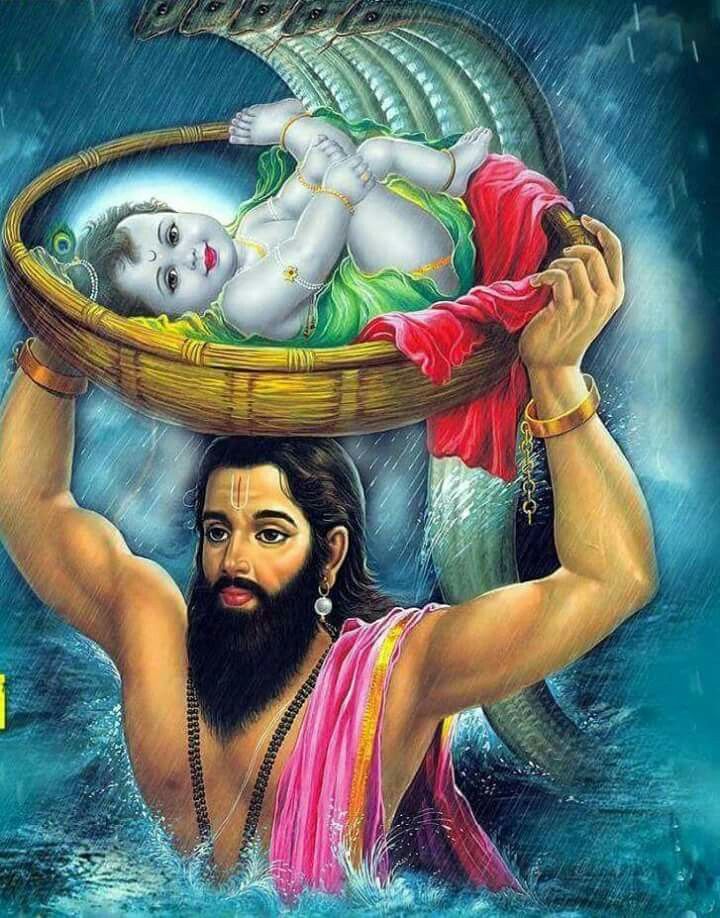
When Lord Krishna was born at midnight, Hindu tradition describes a miraculous series of events. The prison guards fell asleep, Vasudeva's chains opened and the prison doors became free.
Vasudeva received divine guidance to carry the newborn Krishna across the Yamuna River to Gokul, where Nanda and Yashoda lived.
Despite darkness, heavy rain and the overflowing river, Vasudeva safely carried Krishna to Gokul. Krishna was then lovingly raised by Nanda and Yashoda.
Krishna's Childhood
The childhood stories of Lord Krishna are among the most loved stories in Hindu tradition.
Krishna grew up among cowherds in Gokul and Vrindavan. He is remembered for his cheerful and playful nature, his love of butter, his affection for cows and the enchanting music of his flute.
He is lovingly remembered by many names, including Gopal, Govinda, Kanha, Madhava and Makhan Chor.
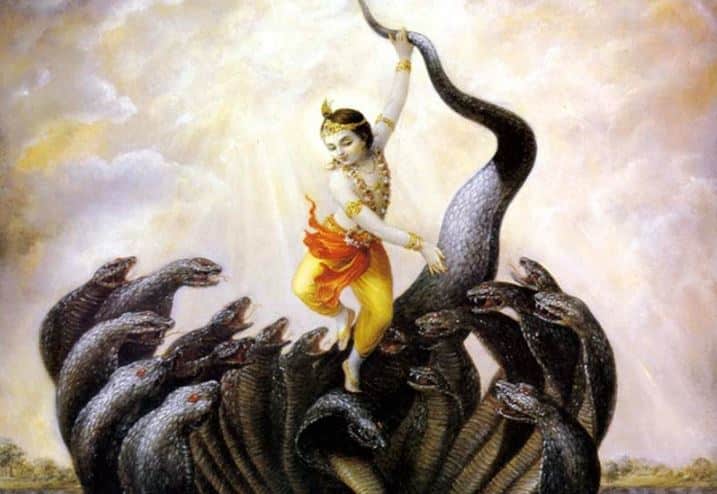
Krishna and Kaliya
One famous story describes Krishna defeating the poisonous serpent Kaliya, whose venom had polluted the waters of the Yamuna River.
The story represents courage, protection and the triumph of life over destructive forces.
Krishna and Govardhan Hill
Another famous episode concerns Govardhan Hill. Krishna encouraged the people of Vrindavan to respect the land and natural resources that sustained their community.
According to tradition, when Indra sent heavy rain upon the village, Krishna lifted Govardhan Hill and provided shelter to the people beneath it.
The story is often understood as a lesson in humility, protection of the community, faith and respect for nature.
Krishna and the Defeat of Kansa
As Krishna grew older, he eventually returned to Mathura. King Kansa had repeatedly attempted to destroy Krishna because of the prophecy concerning his downfall.
Krishna ultimately confronted and defeated Kansa, freeing his parents and the people of Mathura from oppression.
Krishna as a Friend
Friendship is another beautiful theme in the life of Lord Krishna.
One famous example is his friendship with Sudama, a poor Brahmin and Krishna's childhood companion.
When Sudama later visited Krishna in Dwarka with a very simple gift, Krishna welcomed him with deep affection and respect despite being a powerful ruler.
Their friendship teaches that genuine relationships are not determined by wealth, social status or position.
Krishna was also the trusted friend and guide of the Pandavas, particularly Arjuna. Their relationship eventually became the setting for one of the most important spiritual conversations in Hindu philosophy—the Bhagavad Gita.
Lord Krishna and the Mahabharata
Lord Krishna plays a central role in the great Hindu epic, the Mahabharata.
The epic tells the story of conflict between two groups of cousins—the Pandavas and the Kauravas.
Their dispute eventually resulted in the great Kurukshetra War.
Krishna chose not to fight with weapons. Instead, he became the charioteer and guide of the warrior prince Arjuna.
Before the battle began, Arjuna looked across the battlefield and saw his relatives, teachers, friends and respected elders standing on both sides.
Overcome with grief and confusion, Arjuna no longer wished to fight.
It was at this moment that Krishna explained to Arjuna the nature of duty, life, action, knowledge, devotion, death and the eternal soul.
What is the Bhagavad Gita?
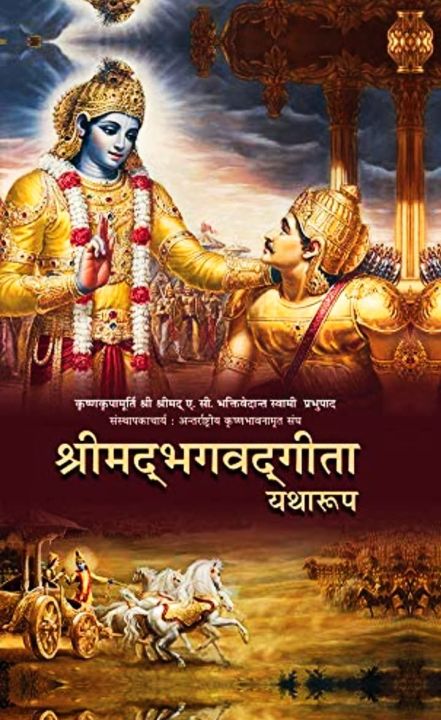
The Bhagavad Gita, commonly known simply as the Gita, forms part of the Mahabharata.
It presents the sacred dialogue between Lord Krishna and Arjuna on the battlefield of Kurukshetra.
The Bhagavad Gita contains 18 chapters and approximately 700 verses.
Although the conversation takes place before a war, the teachings of the Gita extend far beyond warfare. They explore some of the deepest questions of human life.
Main Teachings of the Bhagavad Gita
The Bhagavad Gita contains profound spiritual and philosophical teachings that continue to guide people in everyday life.
Perform Your Duty
Krishna emphasizes dharma—the sincere and ethical fulfilment of one's responsibilities. Students, teachers, parents and leaders all have responsibilities that should be performed honestly.
Focus on Action
Give your best effort without becoming consumed by fear of failure or excessive desire for reward. We control our effort more than we control the final result.
Control the Mind
Discipline and practice help us manage anger, jealousy, fear, greed and uncontrolled desires. A calm mind helps us make better decisions.
Balance Success & Failure
Do not become arrogant after success or hopeless after failure. Both experiences can become opportunities for learning and growth.
The Soul is Eternal
The Gita teaches that the physical body changes and eventually ends, while the true spiritual self—the Atman—is eternal.
Knowledge Removes Ignorance
True knowledge includes more than academic learning. It involves wisdom, self-awareness, ethical judgment and understanding the deeper meaning of life.
Devotion & Love
Bhakti Yoga teaches sincere devotion, humility and love for God. True devotion should also be reflected in kindness and compassion toward others.
Selfless Service
Helping others without constantly seeking recognition develops humility, compassion and a greater sense of responsibility.
Control Desire & Anger
Uncontrolled desire can create frustration, and frustration may develop into anger. Self-discipline helps protect our judgment.
Respect All Beings
Spiritual wisdom encourages us to recognize dignity in every person and practise compassion, equality, kindness and respect.
Krishna as a Symbol of Leadership
Lord Krishna's life also provides powerful lessons about leadership.
He is portrayed not only as a spiritual teacher but also as a statesman, strategist, diplomat, friend and guide.
Before the Kurukshetra War, Krishna attempted to negotiate peace between the Pandavas and Kauravas. Conflict became unavoidable only after peaceful efforts failed.
The Flute and Peacock Feather
Krishna's Flute
Lord Krishna is often portrayed holding a flute. In devotional traditions, the flute represents simplicity, surrender, harmony and divine love.
A flute is hollow within, allowing beautiful music to pass through it. It is therefore sometimes understood as a symbol of removing excessive ego so that wisdom, goodness and love can flow through our lives.
The Peacock Feather
Krishna's peacock feather is another instantly recognizable symbol associated with him.
It is often interpreted as representing beauty, grace, harmony and a close relationship with nature.
How Krishna Janmashtami is Celebrated
According to Hindu tradition, Lord Krishna was born at midnight. For this reason, temples and homes often organize special prayers as midnight approaches.
Janmashtami celebrations commonly include:
- Fasting and prayer
- Visiting temples
- Singing bhajans and devotional songs
- Reading stories from Krishna's life
- Reading and discussing the Bhagavad Gita
- Decorating homes and temples
- Preparing traditional sweets and offerings
- Organizing cultural performances and dramas
- Worshipping baby Krishna at midnight
- Participating in community celebrations
Dahi Handi
In some regions, Janmashtami also includes Dahi Handi, inspired by childhood stories of Krishna's love of butter and curd.
Groups form human pyramids to reach a clay pot placed high above the ground. The activity symbolizes teamwork, courage, cooperation and determination.
Lessons from Lord Krishna for Students
Lord Krishna's life and teachings contain many valuable lessons for students and young people.
Krishna's Message for the Modern World
Thousands of years after the stories of Krishna were first told, his teachings continue to inspire people throughout the world.
Modern life may look very different from the world of the Mahabharata, but human beings still experience many of the same challenges—fear, anger, competition, uncertainty, disappointment, attachment and difficult decisions.
The Bhagavad Gita encourages us to respond to these challenges with wisdom rather than panic, responsibility rather than avoidance and compassion rather than hatred.
Krishna's teachings inspire us to become strong without becoming cruel, successful without becoming arrogant, knowledgeable without becoming proud and spiritual without neglecting our responsibilities.
Krishna Janmashtami therefore represents much more than the remembrance of a divine birth.
It celebrates the victory of hope over fear, wisdom over ignorance, justice over oppression and righteousness over wrongdoing.
A Message from Riverhead English Secondary Boarding School
On the sacred occasion of Shree Krishna Janmashtami, the entire family of Riverhead English Secondary Boarding School extends heartfelt wishes to our students, parents, guardians, teachers, staff members and well-wishers.
May the life and teachings of Lord Krishna inspire all of us to follow the path of truth, responsibility, wisdom, compassion and righteous action.
May our students develop the courage to face challenges, the wisdom to distinguish right from wrong, the discipline to fulfil their responsibilities and the humility to respect every person around them.
As we celebrate this sacred festival, may we also remember the importance of kindness, unity, empathy and helping those who are facing difficulty.