

The Importance of Play in Early Childhood Education
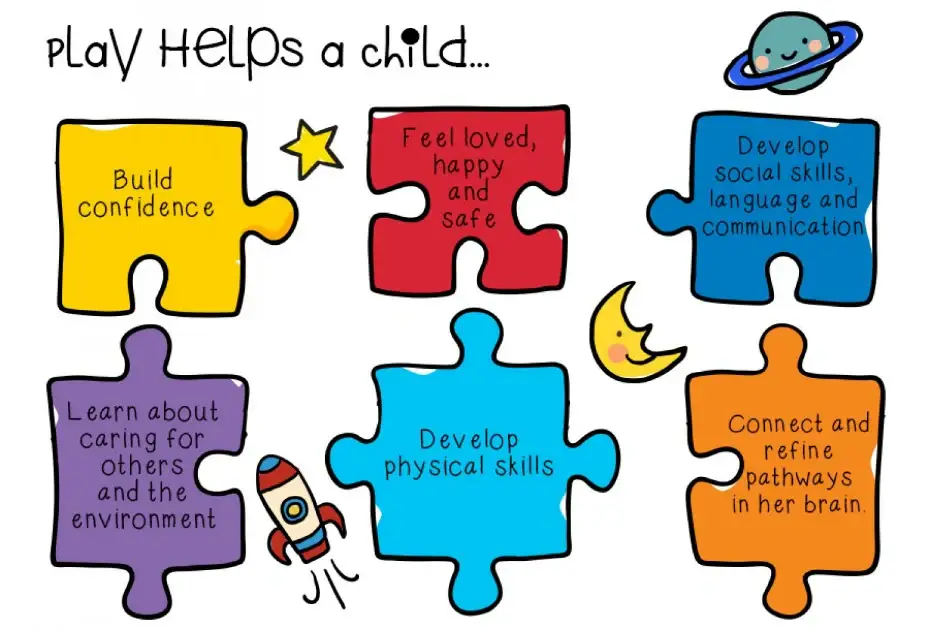
For young children, learning does not always happen while sitting at a desk. In fact, some of the most important learning takes place while children are playing, exploring, imagining, and interacting with others. Play is a natural way for children to understand the world around them and develop skills that become the foundation for future learning.
Play Is a Child’s Natural Way of Learning
Children are naturally curious. They want to touch, explore, ask questions, build things, and discover how things work. Play gives them the freedom to explore these interests in a safe and meaningful environment.
When children build with blocks, for example, they are not simply playing. They are developing coordination, understanding shapes and balance, solving problems, and using their imagination. When they play together, they learn to communicate, share, cooperate, and take turns.
Developing Creativity and Confidence
Play also provides children with opportunities to make choices and express themselves. Whether they are drawing a picture, creating something with materials, pretending to be different characters, or participating in a group game, children learn to express ideas in their own way.
This freedom can help develop confidence. Children learn that their ideas have value and that trying something new is part of learning.
Learning Social Skills
Early childhood is an important period for developing social skills. Through group games and activities, children learn how to interact with their classmates, listen to others, resolve small disagreements, and work together.
These experiences help children become more comfortable in social situations and prepare them for the collaborative nature of later education.
Play and Academic Learning
Play does not replace academic learning. Instead, it can provide a foundation for it. Children who develop curiosity, communication skills, concentration, creativity, and problem-solving abilities through play are better prepared to engage with formal learning as they grow.
The most effective early education creates opportunities for both structured learning and meaningful play.
Giving Children Space to Discover
Every child develops at their own pace. A supportive early learning environment gives children opportunities to explore while providing guidance when they need it.
When children are encouraged to ask questions, experiment, create, and play, school becomes a place they look forward to visiting.
Image suggestion:
Use a bright, natural photograph of young students playing or doing a creative activity together. Avoid a posed group photo. A picture of children building blocks, drawing, reading together, or playing outdoors would work particularly well.
Best image: Young Riverhead students engaged in a hands-on activity with happy, natural expressions.